
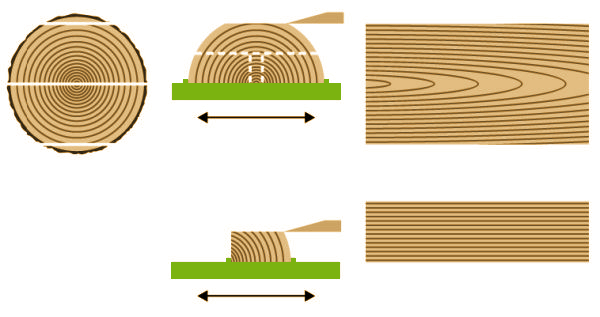
Veneer block (wanche) method
The veneer block method is a longitudinal wood-cutting technique used to produce high-quality sliced veneer. This method involves sawing logs into square blocks (wanche), which are then sliced.
Slicing is performed from the center to the periphery, allowing for veneer with uniform texture and high aesthetic qualities. This method is especially suitable for processing valuable wood species, such as mahogany.
- To ensure the production of high-quality veneer and the most efficient use of raw materials, our specialists assist clients in the following ways:
- Choose the optimal method for log cutting and veneer slicing: our specialists help determine the best techniques to maximize veneer yield with the desired texture. This process considers the raw material’s specific characteristics, including curvature, presence of cracks, visible defects (knots, growths, decay), size, color, structure, and log shape.
- Select the best pre-steaming method for raw materials: experts assist in identifying the ideal steaming process to achieve the desired veneer color and ensure its elasticity.
- Clients are offered the opportunity to be present at all stages of production and make adjustments throughout the veneer manufacturing process.
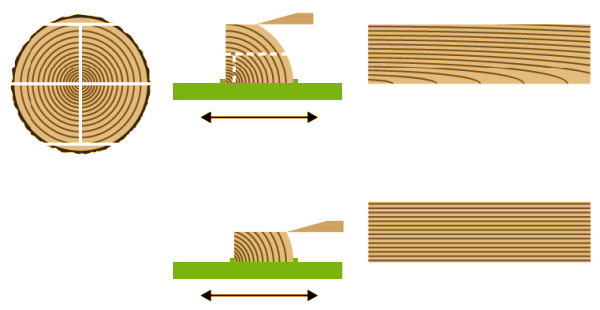
Veneer block-radial method
The veneer block-radial method is a type of slicing that combines features of the veneer block (wanche) and radial wood processing techniques.
This method involves sawing logs into rectangular blocks (wanche), which are then sliced at a specific angle to the wood’s annual rings. This approach results in veneer with predominantly radial fiber alignment. It ensures high-quality veneer with a uniform texture and enhanced dimensional stability, which is particularly valued in furniture manufacturing and decorative applications.
- To ensure the production of high-quality veneer and the most efficient use of raw materials, our specialists assist clients in the following ways:
- Choose the optimal method for log cutting and veneer slicing: our specialists help determine the best techniques to maximize veneer yield with the desired texture. This process considers the raw material’s specific characteristics, including curvature, presence of cracks, visible defects (knots, growths, decay), size, color, structure, and log shape.
- Select the best pre-steaming method for raw materials: experts assist in identifying the ideal steaming process to achieve the desired veneer color and ensure its elasticity.
- Clients are offered the opportunity to be present at all stages of production and make adjustments throughout the veneer manufacturing process.
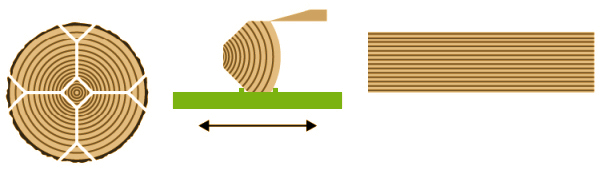
Sector-radial method
The sector-radial method of veneer production is a labor-intensive process applied to individual pieces. This method allows for the production of high-quality veneer, including up to 70% radial veneer.
Radial veneer is distinguished by its straight wood grain pattern, ensuring a uniform appearance and enhanced dimensional stability. As a result, the sector-radial method is widely used in the manufacturing of high-quality furniture and decorative elements, where both aesthetic and physical-mechanical properties are crucial.
- To ensure the production of high-quality veneer and the most efficient use of raw materials, our specialists assist clients in the following ways:
- Choose the optimal method for log cutting and veneer slicing: our specialists help determine the best techniques to maximize veneer yield with the desired texture. This process considers the raw material’s specific characteristics, including curvature, presence of cracks, visible defects (knots, growths, decay), size, color, structure, and log shape.
- Select the best pre-steaming method for raw materials: experts assist in identifying the ideal steaming process to achieve the desired veneer color and ensure its elasticity.
- Clients are offered the opportunity to be present at all stages of production and make adjustments throughout the veneer manufacturing process.
Rotary cutting
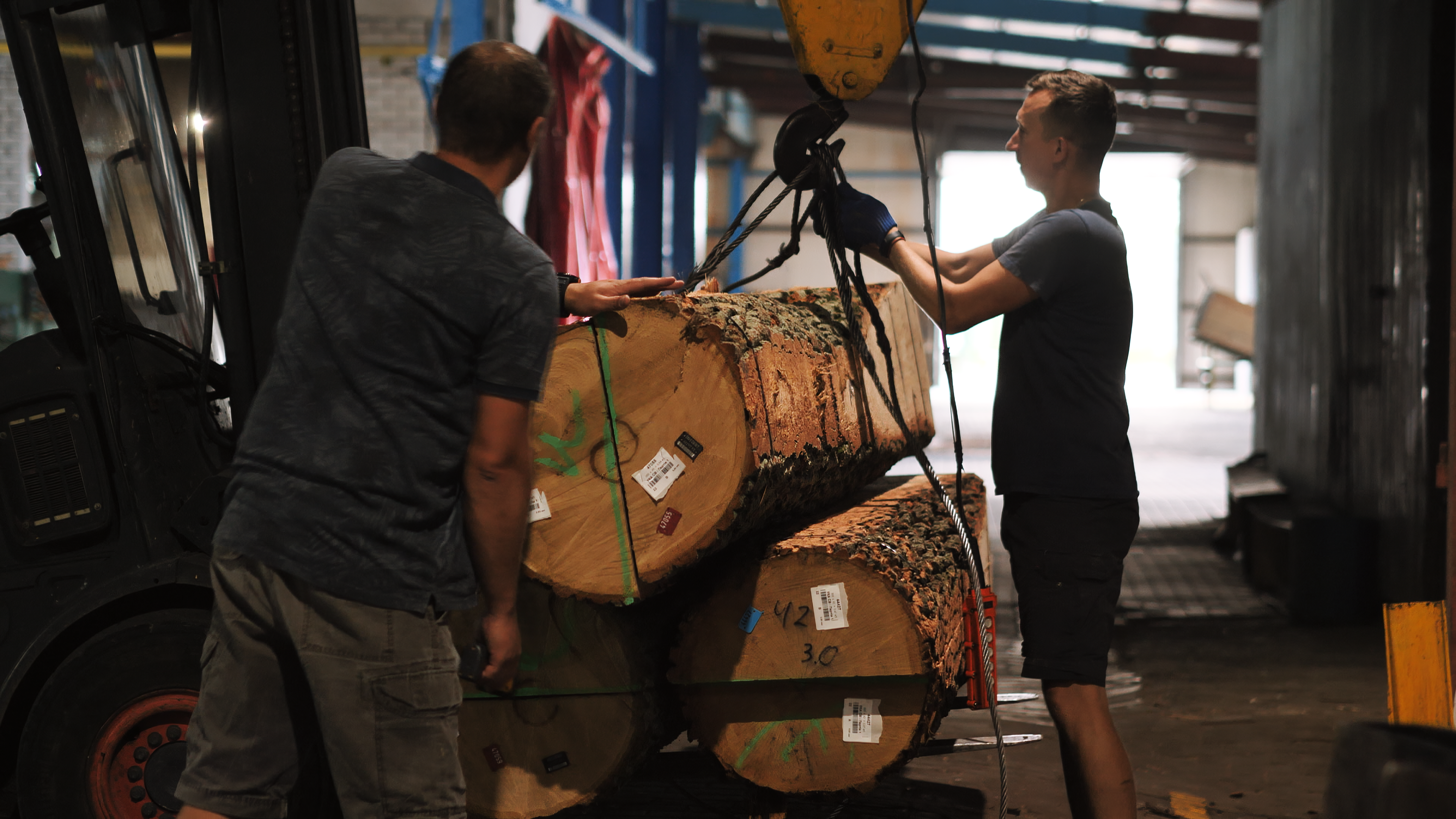
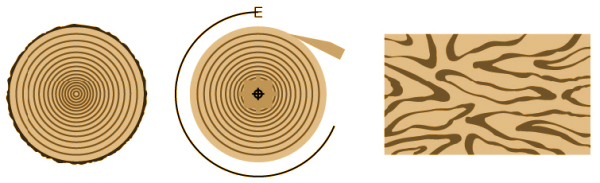
Rotary cutting is a method of veneer production in which a thin layer of wood is peeled from a rotating log using a specialized rotary lathe. During the process, the log rotates around its axis while a knife gradually removes a continuous layer of wood, which is then cut into individual veneer sheets of the required dimensions.
- To ensure the production of high-quality veneer and the most efficient use of raw materials, our specialists assist clients in the following ways:
- Choose the optimal method for log cutting and veneer slicing: our specialists help determine the best techniques to maximize veneer yield with the desired texture. This process considers the raw material’s specific characteristics, including curvature, presence of cracks, visible defects (knots, growths, decay), size, color, structure, and log shape.
- Select the best pre-steaming method for raw materials: experts assist in identifying the ideal steaming process to achieve the desired veneer color and ensure its elasticity.
- Clients are offered the opportunity to be present at all stages of production and make adjustments throughout the veneer manufacturing process.
Pyramid
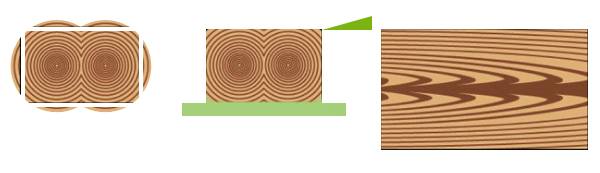
The Crotch Method (from English “crotch”) or “Pyramid” in veneer production involves obtaining unique decorative patterns by slicing wood at the branching points of the trunk or root burls. This method allows the creation of veneer with a distinctive texture resembling the shape of a pyramid or a fork, adding exceptional aesthetic value to the products.
- To ensure the production of high-quality veneer and the most efficient use of raw materials, our specialists assist clients in the following ways:
- Choose the optimal method for log cutting and veneer slicing: our specialists help determine the best techniques to maximize veneer yield with the desired texture. This process considers the raw material’s specific characteristics, including curvature, presence of cracks, visible defects (knots, growths, decay), size, color, structure, and log shape.
- Select the best pre-steaming method for raw materials: experts assist in identifying the ideal steaming process to achieve the desired veneer color and ensure its elasticity.
- Clients are offered the opportunity to be present at all stages of production and make adjustments throughout the veneer manufacturing process.
Eccentric rotary cutting
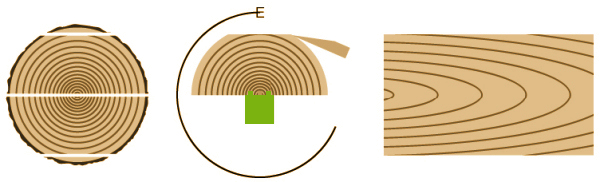
Half-round cut, or eccentric rotary cutting, is a veneer production method in which a layer of wood is sliced from a log using a specialized knife. Unlike traditional rotary cutting, the slicing is performed from an axis offset from the center of the log’s rotation.
- To ensure the production of high-quality veneer and the most efficient use of raw materials, our specialists assist clients in the following ways:
- Choose the optimal method for log cutting and veneer slicing: our specialists help determine the best techniques to maximize veneer yield with the desired texture. This process considers the raw material’s specific characteristics, including curvature, presence of cracks, visible defects (knots, growths, decay), size, color, structure, and log shape.
- Select the best pre-steaming method for raw materials: experts assist in identifying the ideal steaming process to achieve the desired veneer color and ensure its elasticity.
- Clients are offered the opportunity to be present at all stages of production and make adjustments throughout the veneer manufacturing process.
Wanche (peeling from the opposite side)
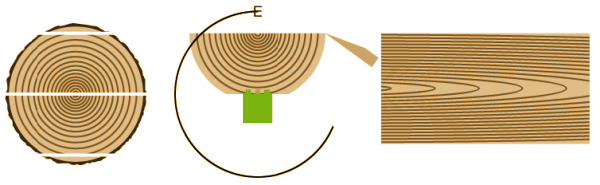
The Half Round Back Cut method, also known as vanchesne peeling from the reverse side, is a specialized process used for processing wood materials, particularly veneer. Its purpose is to create thin decorative layers or to achieve specific physical properties on the surface.
- To ensure the production of high-quality veneer and the most efficient use of raw materials, our specialists assist clients in the following ways:
- Choose the optimal method for log cutting and veneer slicing: our specialists help determine the best techniques to maximize veneer yield with the desired texture. This process considers the raw material’s specific characteristics, including curvature, presence of cracks, visible defects (knots, growths, decay), size, color, structure, and log shape.
- Select the best pre-steaming method for raw materials: experts assist in identifying the ideal steaming process to achieve the desired veneer color and ensure its elasticity.
- Clients are offered the opportunity to be present at all stages of production and make adjustments throughout the veneer manufacturing process.
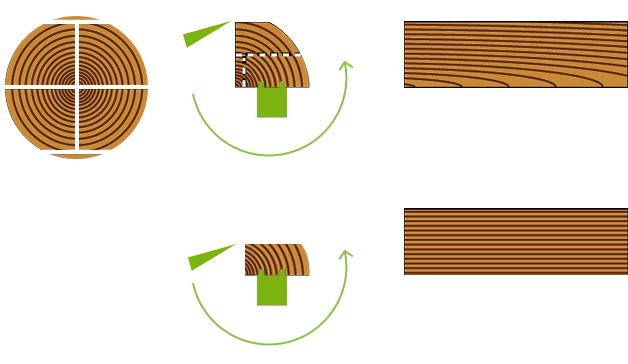
Vanchesno-radial peeling
Rift Cut (vanchesno-radial or eccentric peeling) is a wood or veneer processing method that produces a unique texture with distinct natural lines and characteristic features. This is a type of radial peeling where the wood is processed so that the fibers run at a specific angle to the tree’s center, creating the effect of eccentric cuts.
The method is widely used in furniture manufacturing and other industries to create beautiful and durable products.
- To ensure the production of high-quality veneer and the most efficient use of raw materials, our specialists assist clients in the following ways:
- Choose the optimal method for log cutting and veneer slicing: our specialists help determine the best techniques to maximize veneer yield with the desired texture. This process considers the raw material’s specific characteristics, including curvature, presence of cracks, visible defects (knots, growths, decay), size, color, structure, and log shape.
- Select the best pre-steaming method for raw materials: experts assist in identifying the ideal steaming process to achieve the desired veneer color and ensure its elasticity.
- Clients are offered the opportunity to be present at all stages of production and make adjustments throughout the veneer manufacturing process.
Cut into thirds
Cut into thirds (segmented or eccentric rotary cutting) is a wood processing method in which the tree trunk is divided into three parts or segments for further treatment. This process is employed to achieve specific textures and patterns on wood materials, particularly veneer.

- To ensure the production of high-quality veneer and the most efficient use of raw materials, our specialists assist clients in the following ways:
- Choose the optimal method for log cutting and veneer slicing: our specialists help determine the best techniques to maximize veneer yield with the desired texture. This process considers the raw material’s specific characteristics, including curvature, presence of cracks, visible defects (knots, growths, decay), size, color, structure, and log shape.
- Select the best pre-steaming method for raw materials: experts assist in identifying the ideal steaming process to achieve the desired veneer color and ensure its elasticity.
- Clients are offered the opportunity to be present at all stages of production and make adjustments throughout the veneer manufacturing process.
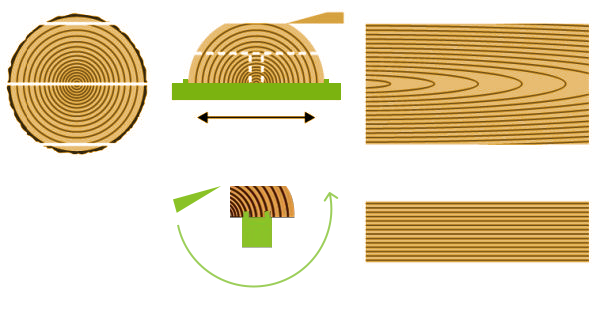
Flat sliced and rift cut
Flat sliced and Rift cut (vanche cutting, combining planing and eccentric rotary cutting) is a hybrid wood processing method that integrates two distinct cutting techniques to achieve a desired surface effect. This method produces wood with an appealing texture that blends smooth, even surfaces with striking patterns characteristic of eccentric rotary cutting.
- To ensure the production of high-quality veneer and the most efficient use of raw materials, our specialists assist clients in the following ways:
- Choose the optimal method for log cutting and veneer slicing: our specialists help determine the best techniques to maximize veneer yield with the desired texture. This process considers the raw material’s specific characteristics, including curvature, presence of cracks, visible defects (knots, growths, decay), size, color, structure, and log shape.
- Select the best pre-steaming method for raw materials: experts assist in identifying the ideal steaming process to achieve the desired veneer color and ensure its elasticity.
- Clients are offered the opportunity to be present at all stages of production and make adjustments throughout the veneer manufacturing process.